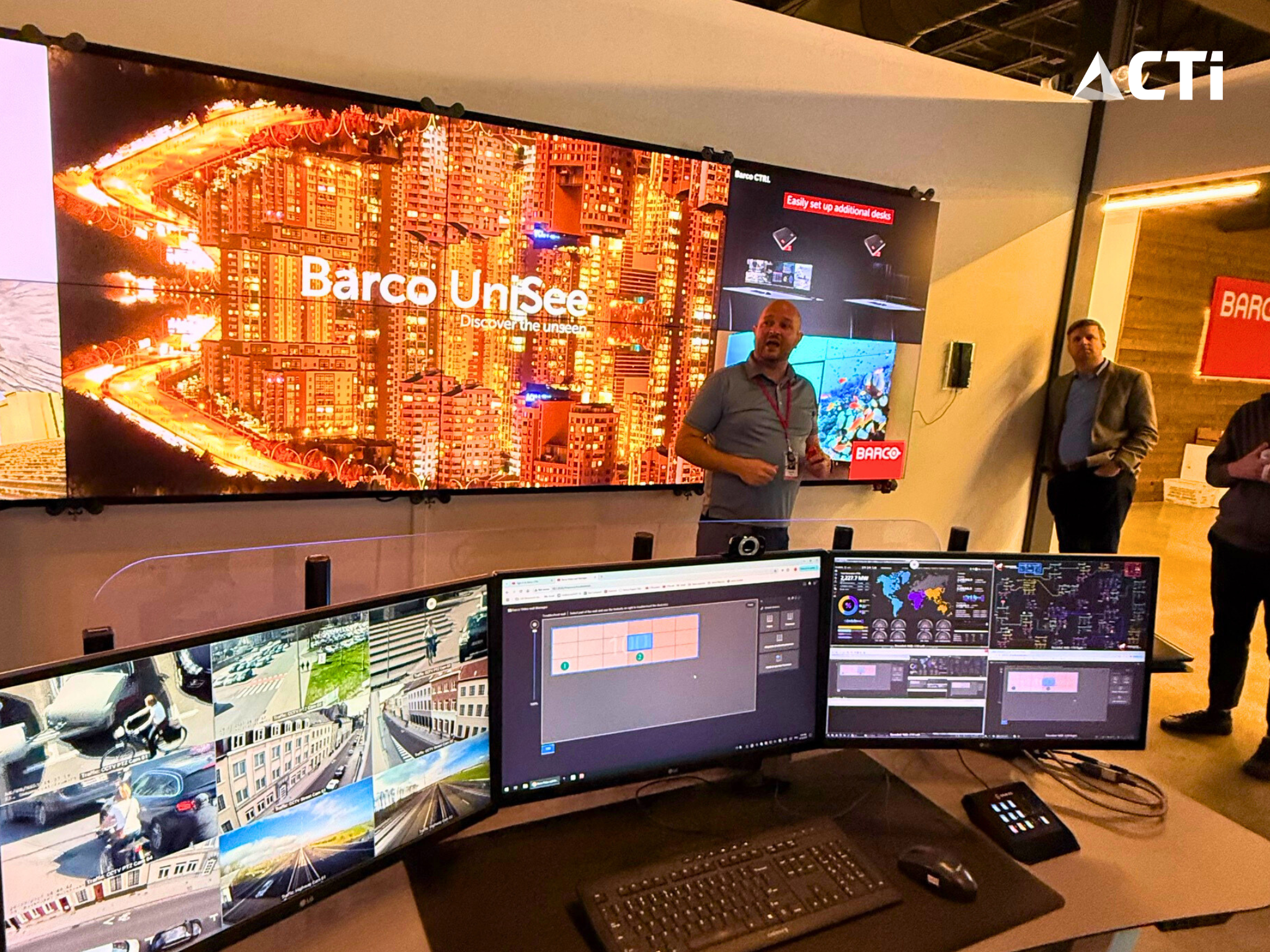
Election Security Gets More Complicated When Everything Has to Work Together
Our partners at Barco recently published a piece about election infrastructure security and the role the operations center plays in it. It caught our attention because when most people think about election security, AV probably isn’t very high on the list.
Most of the attention understandably goes to voting systems, databases, networks, and cybersecurity. But behind the scenes, operations centers are bringing together video, results, security information, communications, and data from multiple systems so people can understand what’s happening and make decisions.
Barco gets into the technology required to move that information securely from the source to the people who need to see it. As the integrator, our job starts with a different question: what happens when you connect all of it together?
A secure product doesn’t automatically make a secure system
An operations center isn’t built around one product or one manufacturer. There may be displays, processors, workstations, control systems, network infrastructure, and technology from a number of different manufacturers, often tied into systems the customer already has in place.
Each individual product can be secure and reliable on its own. The real test comes when all of those products have to operate as one system.
That’s where integration matters. We have to think about how information moves through the room, who has access to it, how the different systems communicate, and where potential points of failure exist. It’s not enough for everything to work when we turn the system on. We have to think about what happens when something doesn’t.
Plan for the bad day
Complex systems eventually find interesting ways to misbehave. Good design assumes they will.
That’s especially important in an election operations center, utility, public safety facility, or any other mission critical environment. If a component goes down, what happens to the operator? If a source becomes unavailable, is there another way to get that information where it needs to go? If something isn’t behaving the way it should, can the team identify the problem quickly without disrupting the entire operation?
Those decisions need to happen during design, not after a problem occurs. Redundancy and resilience aren’t things you bolt onto a system at the end. They have to be considered alongside the rest of the infrastructure from the beginning.
The room still has to work for the people in it
It’s easy to get buried in the technology when designing a sophisticated control room. But at the end of the day, somebody has to sit down and use it.
Good control room design should make a complicated environment easier to operate. That starts with understanding what information people need, where they need it, how quickly they need it, and what they need to do with it. The technology should support that workflow, not dictate it.
That affects everything from how information is presented to how operators interact with the system. A room can have some of the best technology available and still be difficult to use if nobody thought carefully enough about the people sitting at the consoles.
Security is a system problem
Barco’s focus on election infrastructure is an important conversation for our industry. From the integration side, we see another layer to it: a secure product doesn’t automatically create a secure system.
Every piece of technology in that room has to connect to something else. How those connections are designed matters just as much as the products themselves. So do the network, redundancy, interoperability, and the way people actually use the system.
We can’t treat security, resilience, interoperability, and usability as separate conversations. They’re all part of designing an operations center that people can depend on when it matters.
Manufacturers like Barco are doing important work on the technology side of that equation. Our role at CTI is to make sure those technologies come together in a way that works for the customer, works with the rest of their environment, and keeps working when the system is actually being asked to do its job.
That’s where integration earns its place in the security conversation.
Read Barco’s perspective on election infrastructure security and the technology behind today’s election operations centers.
Talk to Us About Your Project
Too busy to chat right now?
Send us a message.